A positive research culture
GIBA-A is building a collaborative research community that connects expertise across disciplines, institutions and African countries.
We aim to help members find collaborators, exchange ideas and develop research relevant to African populations. The network will provide a platform for sharing research, training and relevant funding opportunities, and for developing collaborations around shared research interests.
An inclusive and supportive research culture is central to our approach, with particular attention to the development and visibility of early career researchers. By connecting expertise and resources across Africa and through international partnerships, we aim to strengthen opportunities for African researchers to lead collaborative studies.

Search our Network
Connect with researchers and partners whose expertise and interests complement your own.
Explore the GIBA-A network to identify potential collaborators across countries, institutions and disciplines. Whether you work in research, clinical practice, policy, industry or community engagement, the network aims to help you find people with whom you can exchange knowledge and develop new research ideas.

Our Team
Meet the team driving the Gut-Immune-Brain Axis Africa Network (GIBA-A) to connect expertise, promote collaboration and build capacity and lasting research partnerships across disciplines.

Professor Shane Norris
Director of the GIBA-A Network
More Info
Professor Shane Norris
Director of the GIBA-A Network
Professor Shane Norris is the Director of the DSTI-NRF Centre of Excellence in Human Development, at the University of the Witwatersrand, South Africa, which houses the GIBA-A network. He is also a Professor of Global Health at the University of Southampton (UK).
Prof Norris’s research focuses on lifecourse epidemiology with a specific interest in the development of intergenerational risk for non-communicable disease. His expertise includes nutrition and body composition across the lifecourse and longitudinal-cohort study methodologies. He works with several scientists across Africa to both better understand and develop interventions that improve maternal and child health outcomes. His work is relevant to gut–brain axis research through its focus on how early-life nutrition, gut health, environmental exposures and infections may influence child growth and brain outcomes.
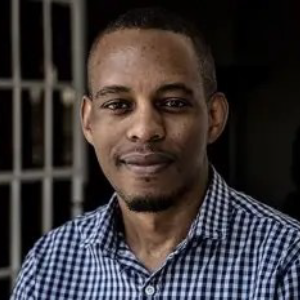
Dr Raylton Chikwati
Network Manager
More Info
Dr Raylton Chikwati
Network Manager
Dr Raylton Chikwati is the Network Manager of the GIBA-A Network and an early-career researcher at the University of the Witwatersrand, with a background in clinical biochemistry and public health.
His interest in the microbiota-gut-brain axis aligns with his broader aetiological epidemiology career vision aimed at understanding the mechanisms through which biological, behavioural, social, and environmental exposures influence health across the life course.
He completed his PhD at the University of Witwatersrand.

Dr Khuthala Mabetha
Centre & Research Manager
More Info
Dr Khuthala Mabetha
Centre & Research Manager
Dr Khuthala Mabetha is the Centre and Research Manager at the DSTI-NRF Centre of Excellence in Human Development at the University of the Witwatersrand. She holds a PhD in Demography and Population Studies from the University of the Witwatersrand. Her research interests include child and family health, population health dynamics, and the health and well-being of young women. She has contributed to research associated with the Bukhali trial, which explores opportunities to improve the health and well-being of young women through preconception and pregnancy interventions. Her work contributes to advancing evidence-informed research on human development and health across the life course.
Through her professional role at the Centre of Excellence in Human Development, Dr Mabetha supports research coordination and the advancement of collaborative research initiatives focused on human development across the life course. Her work contributes to strengthening research capacity, fostering interdisciplinary collaboration, and supporting evidence generation to inform policy and practice in South Africa.
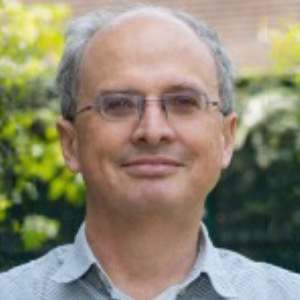
Professor Scott Hazelhurst
More Info
Professor Scott Hazelhurst
Professor Scott Hazelhurst is Professor of Bioinformatics in the School of Electrical and Information Engineering and Senior Scientist at the Sydney Brenner Institute for Molecular Bioscience at the University of the Witwatersrand, Johannesburg.
Scott’s research spans bioinformatics, the microbiome, high-performance computing, and data science. As co-Principal Investigator of the NIH-funded MADIVA research hub and a collaborator on several major African genomics initiatives, including AWI-Gen and eLwazi, he has extensive experience leading interdisciplinary, data-intensive health research. He provides expertise in microbiome analytics, computational biology, and the integration of complex biological and population-health datasets, supporting the Network’s goal of advancing understanding of the gut-immune-brain axis in African populations.
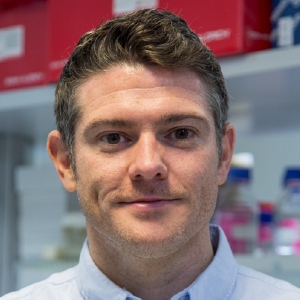
Jonathan Swann
Director of the GIBA Network+
Jonathan Swann is a Professor of Biomolecular Medicine in the School of Human Development and Health, Faculty of Medicine at the University of Southampton.
Professor Swann is also the Director of the UK Gut-Immune-Brain Axis Network+ (GIBA Network+), a national initiative that brings together researchers, clinicians, industry partners, and public stakeholders to advance understanding of the complex interactions between the gut microbiome, immune system, and brain, and their implications for health and disease.
For over 20 years he has led an integrated microbial and metabolic profiling-based research programme to understand the influence of gut microbiota on the mammalian metabolic system and its implications for development, health, and disease with specific interest in the gut-immune-brain axis.
He has received funding from national and international research councils, charities and industry partners to explore the microbial influence on emotional behaviour, cognitive function, neurodevelopment, neurological dysfunction and neurodegeneration. His research also explores the potential to modulate GIBA through nutritional, lifestyle, and pharmaceutical interventions.
He is an Associate Editor for the journals, Microbiome and Biofilms and Microbiomes, and he sits on the Scientific and Organising committees for Mind, Mood and Microbes, the international conference on the microbiota-gut-brain axis.
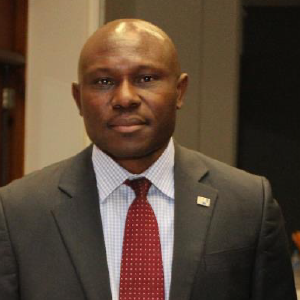
Professor Pascal Bessong
More Info
Professor Pascal Bessong
Professor Bessong is the Principal Investigator of the AIDS Virus Research Laboratory; Founding Head of the HIV/AIDS & Global Health Research Programme; Founding Director of the SAMRC-UNIVEN Antimicrobial Resistance and Global Health Research Unit; Founding Director of the Institute for Pathogen and Global Health; and Visiting Scholar at the School of Medicine, University of Virginia, USA.
Professor Bessong is a B2 rated scientist of the National Research Foundation, an elected member of the Academy of Science of South Africa; a fellow of the African Academy of Sciences, a Registered Natural Professional Scientist; and Associate Editor of the South African Journal of Science (Cell, Molecular biology, and Health). He received the South African Medical Research Council 2023 Scientific Gold Merit Award for outstanding contribution to health research.
Bessong is a virologist, microbiologist, a global health researcher, and an experienced professor with a demonstrated history of working in the higher education sector for more than 17 years. His research focuses on microbiological investigations for translational science and global health, using innovative approaches and technologies. Specifically, he is interested on viral and human determinants of HIV drug resistance and the sustainability of antiretrovirals towards the UNAIDS 2030 target on viral suppression. He is also interested in the interactions of gut microbiota and antimicrobial resistance, and the interactions of gut infections with growth, cognitive development, and vaccine response in young children. He has more than 15 years of experience in the establishment and maintenance of prospective, community-based birth and adult cohorts for observational biomedical investigations.

Professor Thomas Cousins
Professor Thomas Cousins is an anthropologist of Southern Africa with a particular interest in health, labour, and kinship, especially nutrition and pharmaceuticals and their attendant forms of value and life. His fieldwork to date has been in South Africa on topics including global health surveillance, welfare, communications technologies, and zoonosis. . He is the Clarendon-Lienhardt Associate Professor in the Social Anthropology of Africa at the University of Oxford and a Tutorial Fellow at St Hugh’s College. His research explores the social, cultural and political dimensions of health, with particular interests in nutrition, pharmaceuticals, metabolism and the microbiome. His work on the gut examines how biological processes intersect with lived experiences, health systems and social inequalities in South Africa.

Dr Luicer Olubayo
More Info
Dr Luicer Olubayo
Dr Luicer Olubayo is a Scientist at the African Genomics Program in Kenya and a Visiting Scientist at the Sydney Brenner Institute for Molecular Bioscience at the University of the Witwatersrand, Johannesburg.
Although her background is infectious diseases-particularly pathogen genomics, malaria genetics, and hepatitis B virus-her research has evolved to focus on human genetic epidemiology, integrating gut microbiome science, host genomics, immunogenetics, and environmental exposures to understand disease susceptibility and resilience in African populations. She works at the interface of infectious and non-communicable diseases, including HIV, cardiometabolic disease, cognitive ageing, and multimorbidity.
Her portfolio includes leading and contributing to projects on gut microbiome diversity and function-including strain-level metagenomics, metagenome-assembled genomes, and microbiome-hormone interactions-alongside host genetic analyses such as GWAS of HIV susceptibility and progression, polygenic risk scores, and population-specific variant interpretation. She also works in immunogenetics, focusing on T-cell cross-reactivity, HLA variation, and host–pathogen interactions, as well as epigenomics, particularly whole-genome bisulfite sequencing (WGBS) to investigate immune-ageing and methylation signatures in infectious disease cohorts. Her broader research integrates multi-omics approaches, including metabolomics, proteomics, and lipidomics, with machine-learning and systems biology to uncover pathways linking the microbiome, inflammation, ageing, and long-term disease risk.
She believes that big-data analyses, phylogenetics, and advanced bioinformatics have an important role in informing public health strategy and policy, especially in Africa. The SBCT fellowship provides a unique platform for her to pursue these goals through collaborations, networking, training, and building interdisciplinary research capacity.

Dr Anusha Lachman
More Info
Dr Anusha Lachman
Dr Anusha Lachman is Head of the Clinical Unit for Child Psychiatry at Tygerberg Hospital in Cape Town and a lecturer at the Department of Psychiatry, Stellenbosch University.
She contributes to advancing infant and maternal mental health through clinical practice, research and postgraduate training. Her research focuses on infant mental health, adolescent neuropsychiatry, and culturally sensitive approaches to child and maternal mental health in African settings. She also plays an important role in strengthening training and research capacity in infant mental health across the African continent.